
qq音乐
36 South Sudanese students awarded Chinese ambassador scholarship_我的网站

一 | The Chinese Embassy in South Sudan awarded scholarships to 36 students from the University of Juba on Friday, reinforcing China's ongoing commitment to the country's higher education and youth development.
Established in 2021, the Chinese Ambassador Scholarship in South Sudan provides vital financial assistance to high-achieving students from underprivileged backgrounds.
According to Chinese Ambassador to South Sudan Ma Qiang, the initiative has now supported more than 100 students, and the embassy also donated books to the university to further support academic research and learning.
"We will continue to strengthen exchanges with the University of Juba and look forward to more and more students becoming messengers of cultural exchanges, inheritors of friendship and promoters of relations between our two countries," Ma said at the award ceremony.
John Akec, vice chancellor of the University of Juba, said the recipients, primarily second- and third-year students, represent a range of academic disciplines, with a focus on the sciences, economics, and business.
Expressing his gratitude to the Chinese embassy for its ongoing support, Akec said the scholarship program offers hope to a new generation poised to shape the nation's future.
Speaking on behalf of the recipients, Lilian Kerlili Hassan, a third-year computer science and information technology student, expressed deep appreciation for the support.
She noted that the award represents more than just financial aid; it serves as a platform for students to achieve their academic goals and prepare for future leadership roles.
。
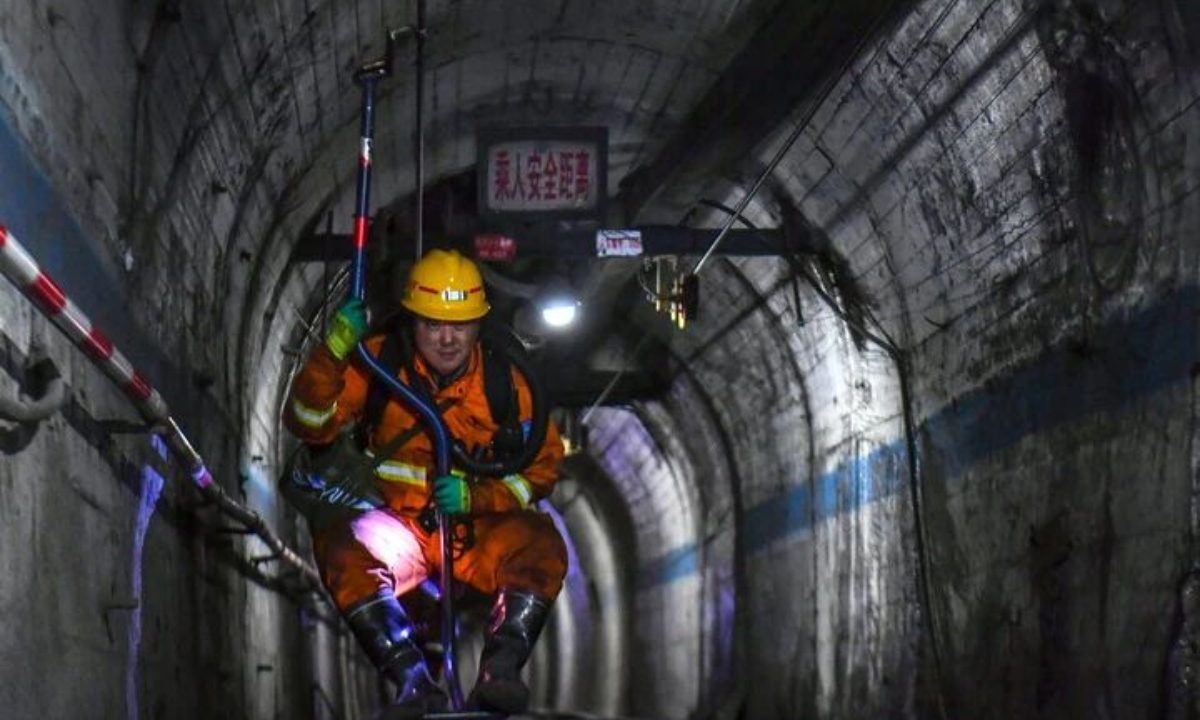
China is stepping up the intelligent transformation of its high-risk coal mines, as the country's top economic planner and energy regulator rolled out a new development plan during the 15th Five-Year Plan (2026-30) period that calls for greater use of artificial intelligence (AI) and robots in hazardous underground operations.
The National Development and Reform Commission and the National Energy Administration (NEA) on Monday announced a plan that emphasizes the need to strengthen coal's role as a foundational and balancing pillar in China's energy supply system while accelerating high-quality development in the sector, according to the NEA's website.
According to the plan, China will deepen its "AI Plus" initiative in the coal industry by collecting and integrating AI-related data and expanding the use of AI across key scenarios such as exploration and design, construction and production, operation and maintenance, and safety management.
The plan also calls for faster development of specialized large-language AI models for the coal sector, with breakthroughs needed in intelligent perception, autonomous decision-making and intelligent control. It also emphasizes the need to establish a number of pilot coal mines for the integrated application of AI, and improvements in coal mine safety.
The plan specifically targets intelligent upgrades at disaster-prone mines and those that have experienced major accidents, pushing for robotic substitution at hazardous posts, according to the document.
Industry observers said that the move signals a shift in China's coal mine automation efforts from pilot projects to large-scale deployment. High-risk tasks such as tunneling, inspection, rescue, roof support and blasting are emerging as priority areas for substitution by robots.
Hangzhou-based DEEP Robotics has been focusing on the use of quadruped robots for mine inspections and emergency rescue. In May, the company worked with the Zhejiang Provincial Emergency Management Department and other agencies to unveil its embodied intelligent equipment and conducted a live reconnaissance and rescue drill in a mine tunnel in Changshan, East China's Zhejiang Province, the company told the Global Times on Monday.
Using DEEP Robotics' Lynx M20 wheeled-legged robot as its mobile platform, it innovatively integrates large-language models and an onboard platform, and is equipped with a dual-spectrum pod, 5G module, edge computing unit, and other equipment.
Meanwhile, Lingbao CASBOT has formed a joint venture, to focus on the research and application of embodied intelligence robots for underground mining, according to the Beijing Daily. The company has since become involved in key processes such as rock drilling, blasting charge loading and support installation.
Such AI-powered equipment could significantly improve mine disaster warning and emergency response capabilities, helping mines transition to "less-manned" and "unmanned" operations and reducing human workers' exposure to danger, Lin Boqiang, director of the China Center for Energy Economics Research at Xiamen University, told the Global Times on Monday.
Lin said that robots have a clear advantage in dangerous tasks such as patrol inspections in 50 C deep shafts, gas leak detection, and heavy lifting. "For robots, these are exactly the jobs they should be taking on," he said.
Market research firm Zhiyan Consulting estimated that the market for mining robots grew to 2.85 billion yuan ($42.24 million) in 2025.
。

二 |
Current article:http://h5d2.shengyaodanrongchui.buzz/news/20260826_38318.html
Published on:12:22:02
我的网站相关阅读
- 『鉄腕DASH』、冬の名物企画に“TOKIOの後輩アイドル”大量投入で募る日テレへの不満…早くも見えた松岡昌宏降板の“痛手”
- 谢林汉姆:仍想不通热刺为何开掉波帅,本应利用欧冠亚军实现跃升
- Ranveer Singh and Deepika Padukone Step Out for a Dosa Date Amid Dhurandhar 2's Success
- 钟睒睒无偿捐赠市值9.27亿元股份 近10个月捐款超10亿元
- India logs 2,424 new Covid cases
- Kareena Kapoor Khan Teases Meghna Gulzar With a Fun Travel Update From Daayra Shoot
- 消息人士:美中东情报设施遭伊朗重创,修复或需数十亿美元
- August 10th: Remembering a Day of Tragedy for the People of Vietnam
- 3D打印设备全球爆单 融资客加仓这些股
我的网站最新文章
- 7 killed as a suspected migrant-smuggling vehicle crashes in southern Germany
- 不会吧!冠军后卫恐遭被裁?仅27岁!都怪铁牛那一拳啊!
- 雷电、山洪灾害双预警 宁夏这些地区注意防范
- 毕丹星要求和易华仁案一样于高庭受审 高庭法官下个月裁决
- 《噪声源分类指导目录》发布
- Iraqi man arrested in Germany over alleged involvement in war crimes as a member of IS
- 新华社丨江西婺源:秋日古村绘美卷
- 국민의힘, 네팔 홍수 한국인 8명 실종에 "李정부, 모든 노력 다해야"
- 重庆市綦江区:打造全国网络安全实训标杆以及西部重要的数据灾备节点
- Oklahoma attorney general sues to stop US's first public religious school
- 全覆盖 零容忍 严执法 重实效 兴城市持续开展建筑施工隐患排查整治
- 券商客户经理服务哪家好?8家主流券商深度对比
- 应急管理部:7月自然灾害共致1672.9万人次受灾 直接经济损失571.5亿元
我的网站随机推荐
- 拼多多主图优化技巧
- 巴雷拉:我们确实很疲劳但我们不找借口,要努力做到最好
- 包含大六座百万级旗舰产品 阿维塔将在2030年内推出17款全新产品
- 隋青赴抚顺市调研
- 韩红基金会救护车采购陷争议,供应商已被立案调查
- Levee breach sealed in China's flood-hit Henan
- 한라산 등반 쓰러진 60대 해경 헬기 구조
- ‘G7 Is Irrelevant’: 'Global South' Holds West Responsible For Ukraine Crisis, Says Think-Tank Chief
- 【芸能 覆面座談会】自民 衆院選で歴史的圧勝 高市一強に野党どう対抗?
- 四川马边县极端强降雨引发山洪,有车辆被冲到墙体上悬挂
- 8月鸡蛋为什么涨价
- China condemns unilateral sanctions without basis in international law or authorization of UN Security Council: FM
- Boman Irani’s Hilarious Take on Trump’s Peace Talks Goes Viral